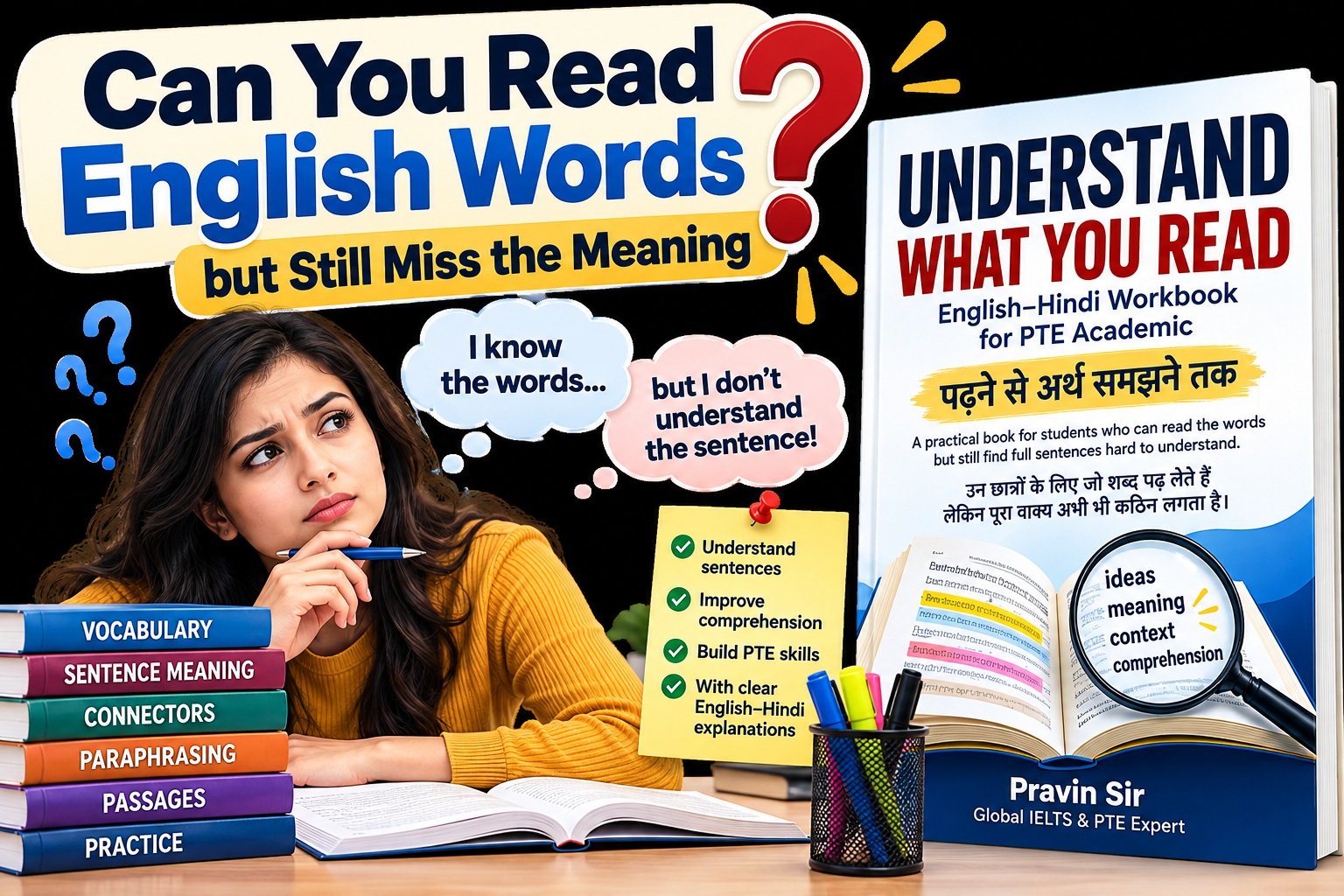
Q1. Why can students read every word but still not understand a passage?
Reading words and understanding meaning are different skills.
A student may recognize every individual word but fail to understand the relationship between ideas, the writer's purpose, the argument or the conclusion.
Q2. What is the difference between reading and comprehension?
Reading is decoding the written language. Comprehension involves constructing meaning from it.
Good comprehension requires attention to ideas, relationships, context and purpose.
Q3. Why do students sometimes understand a passage only after reading it several times?
They may be focusing too heavily on individual words instead of the overall structure.
Understanding improves when the reader asks what each paragraph is doing and how it connects to the central idea.
Q4. Should students look up every unfamiliar word?
Not always.
If every unfamiliar word interrupts the reading process, comprehension can actually become weaker. First try to understand the meaning from context.
Q5. How can students identify the main idea?
Ask:
If I had to explain this paragraph in one sentence, what would I say?
That question forces the reader to distinguish the central idea from supporting details.
Q6. How does this help IELTS and PTE students?
Both examinations require more than word recognition. Students must understand questions, locate relevant information, identify relationships and avoid attractive but incorrect interpretations.
Q7. What is one useful reading habit?
After every paragraph, mentally complete:
“The writer is basically saying that…”
This converts passive reading into active comprehension.
Q8. What is the biggest mistake readers make?
They often try to remember everything instead of understanding the structure.
Strong readers identify the main idea first and then use details to support it.