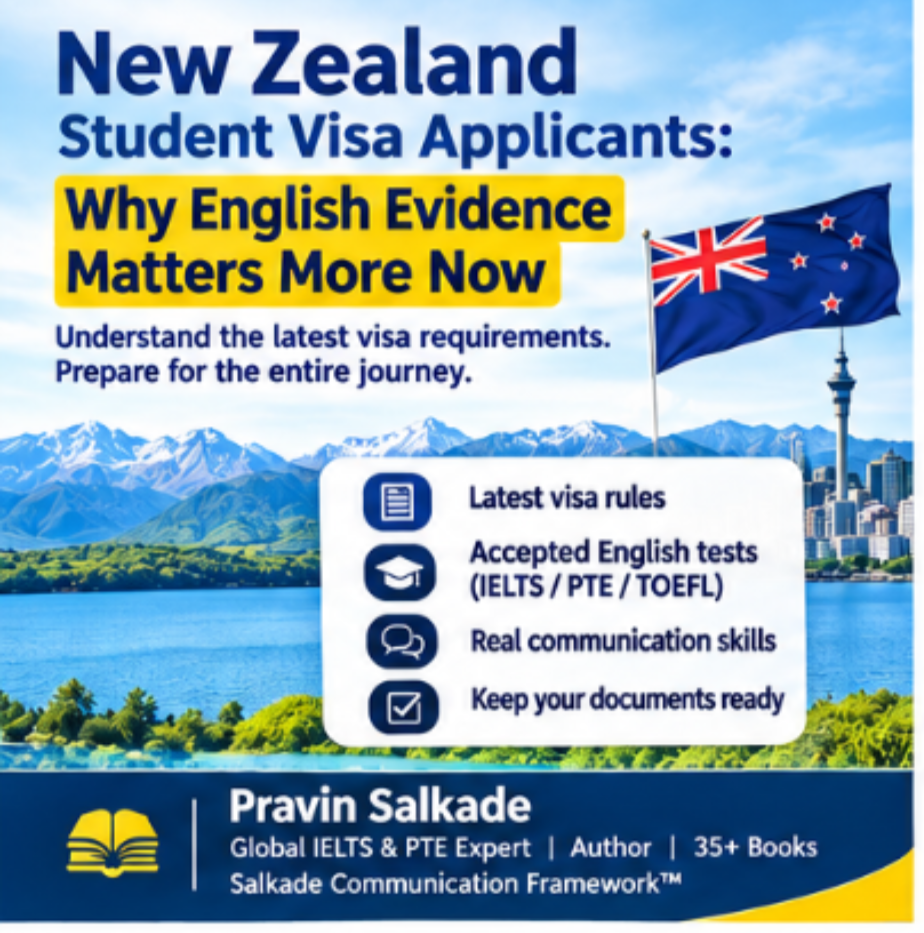
One of the most common questions from students planning to study in New Zealand is: Do I need IELTS or PTE for my student visa?
The answer is more nuanced than simply saying yes or no.
Q1. Is IELTS compulsory for every New Zealand student visa?
No.
There is no blanket rule saying every student-visa applicant must submit IELTS.
INZ considers the circumstances and evidence in each application. English-language test results can be used as evidence where relevant.
Q2. What changed in October 2026?
Immigration New Zealand strengthened its student-visa instructions from 27 October 2026 to specify that English-language ability is a key factor in determining whether a student can meet the conditions of their student visa.
This makes English evidence more important in the overall student-visa picture.
Q3. Does this mean PTE is now compulsory?
No.
The October change does not create a universal PTE requirement.
Whether PTE Academic is appropriate depends on the student's course, institution and applicable immigration requirements.
Q4. Can I use my previous English-medium degree as evidence?
Possibly.
INZ recognises education and qualifications among the forms of evidence that can demonstrate an English-speaking background in relevant immigration contexts.
However, students should not assume that an English-medium qualification automatically eliminates every possible request for further evidence.
Q5. Can IELTS or another test strengthen my evidence?
Where appropriate, yes.
INZ's student-visa guidance says applicants can provide evidence of English or academic requirements, including English-language test results such as IELTS or TOEFL.
Q6. What should I check before booking IELTS or PTE?
Check these three things first:
1. University requirement
What score does your institution require?
2. Course requirement
Does your specific programme have a higher English standard?
3. Visa evidence
What evidence is relevant to your individual visa application?
Only then decide which test, if any, you need.
Q7. Why should students still prepare seriously for English?
Because a test score is only one part of international study.
You will need English for:
- lectures
- assignments
- presentations
- group discussions
- emails
- interviews
- everyday communication
A strong score without strong communication ability can create problems later.
Q8. What is the safest approach?
Don't ask:
What is the lowest score I can get?
Ask:
What English evidence do I need, and what level of English will help me succeed after I arrive?
That is a much better question.
Always verify the latest requirements with Immigration New Zealand and your education provider before applying.
Pravin Salkade | Global IELTS & PTE Expert