IELTS Speaking Band 7: Improve Fluency, Vocabulary & Confidence
Discover what separates Band 7 IELTS Speaking from Band 6 and learn practical ways to improve fluency, ideas, vocabulary and communication.
Read the article
IELTS Collocations: What Are 300 Powerful Word Partnerships and How Can They Improve Your IELTS Score?
Collocations can help you produce English that sounds more natural, precise and sophisticated. In IELTS, vocabulary is not simply about knowing difficult words. You need to demonstrate that you can use vocabulary appropriately and accurately.
Read the article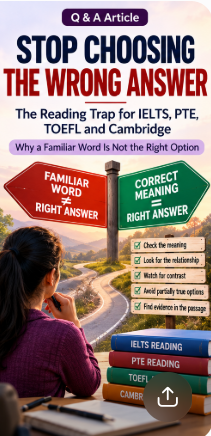
Why Is the Most Familiar Word Often the Wrong Answer in Reading Tests?
Why do students choose familiar words? Because familiarity creates confidence. When an answer option repeats a word from the passage, the brain notices the match quickly. It feels like evidence. But a shared word is not necessarily a shared meaning
Read the article
From Mistakes to Marks: How Can Students Turn English Mistakes into Better Marks?
From Mistakes to Marks: How Can Students Turn English Mistakes into Better Marks?
Read the article
IELTS Writing Task 2: The Four-Step Method for Band 7+
Q1. What is the Four-Step Method for IELTS Writing Task 2?The Four-Step Method is a simple system for producing a well-organised, relevant a...
Read the article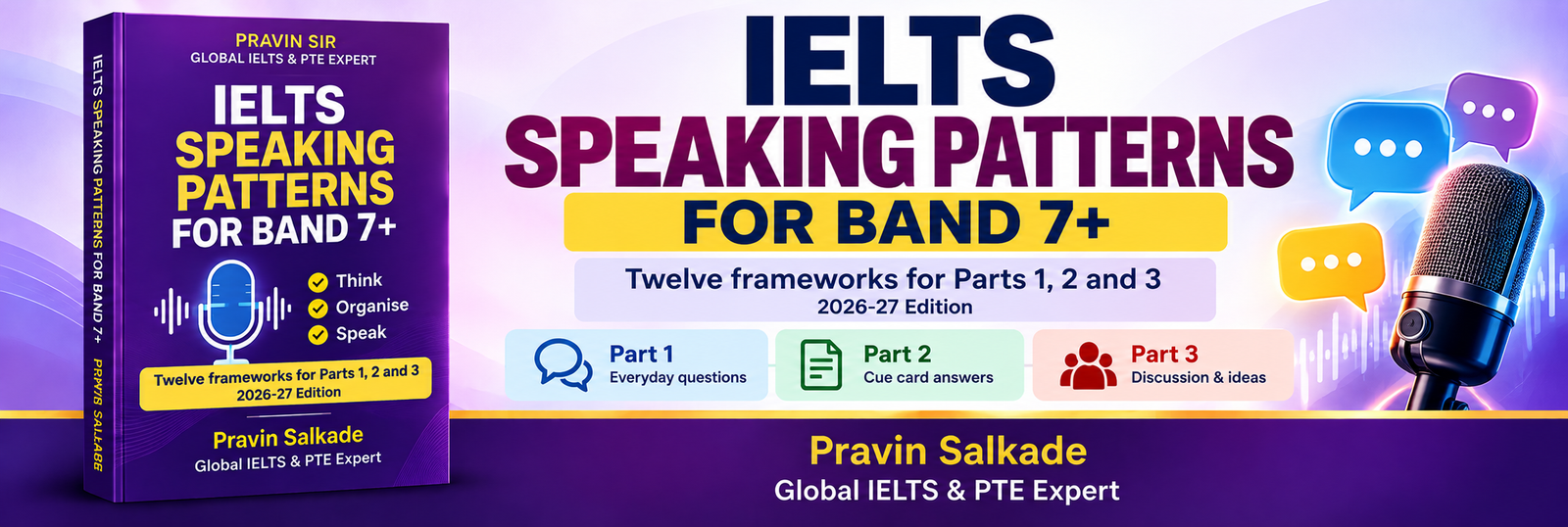
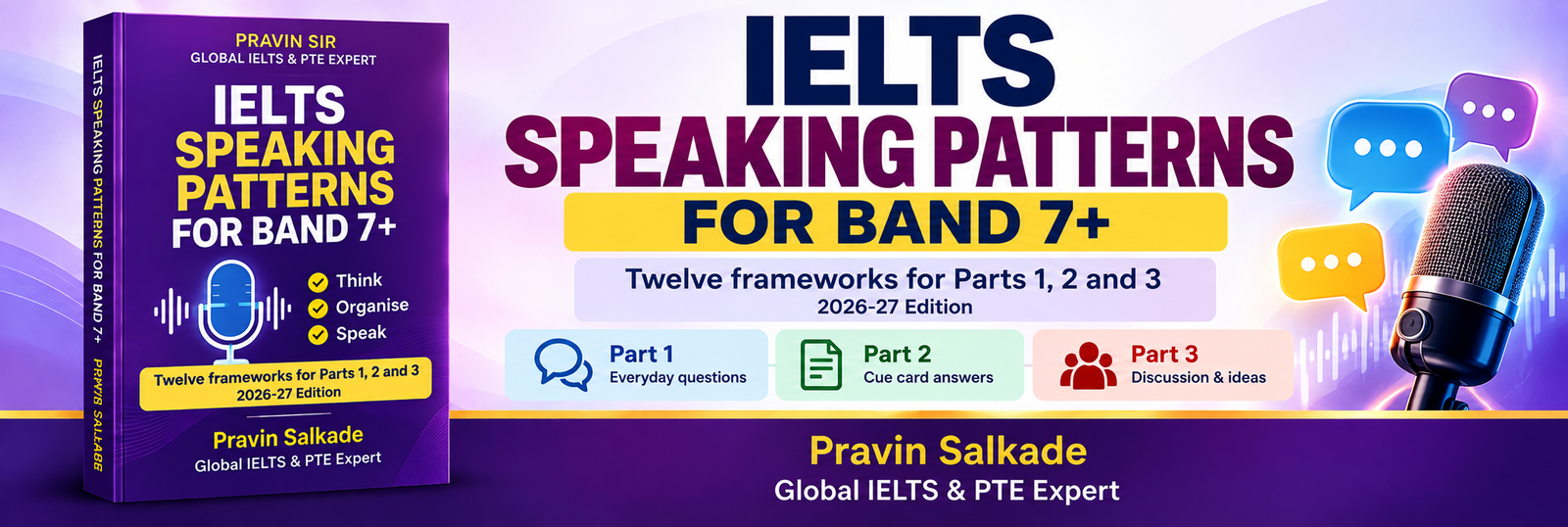
IELTS Speaking Patterns for Band 7+ | 12 Practical Frameworks
IELTS Speaking Patterns for Band 7+ presents twelve reusable frameworks across Parts 1, 2 and 3, built around Think → Organise → Speak rather than memorised answers.
Read the article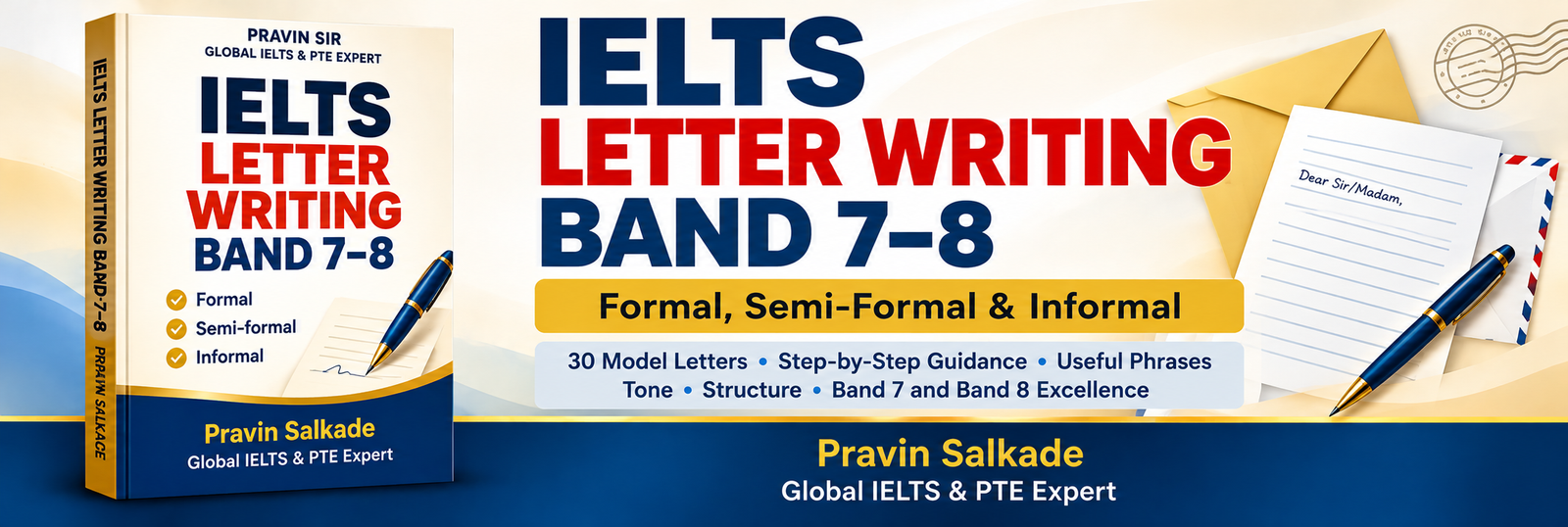
IELTS Letter Writing Band 7–8 | Formal, Semi-Formal & Informal
Learn how to write better IELTS General Training Task 1 letters by controlling tone, purpose, bullet points, paragraphing, detail, vocabulary and sign-offs. IELTS Letter Writing Band 7–8 contains formal, semi-formal and informal examples and uses a consistent eight-block structure while emphasising that the frames can be reused but the sentences should not simply be memorised.
Read the article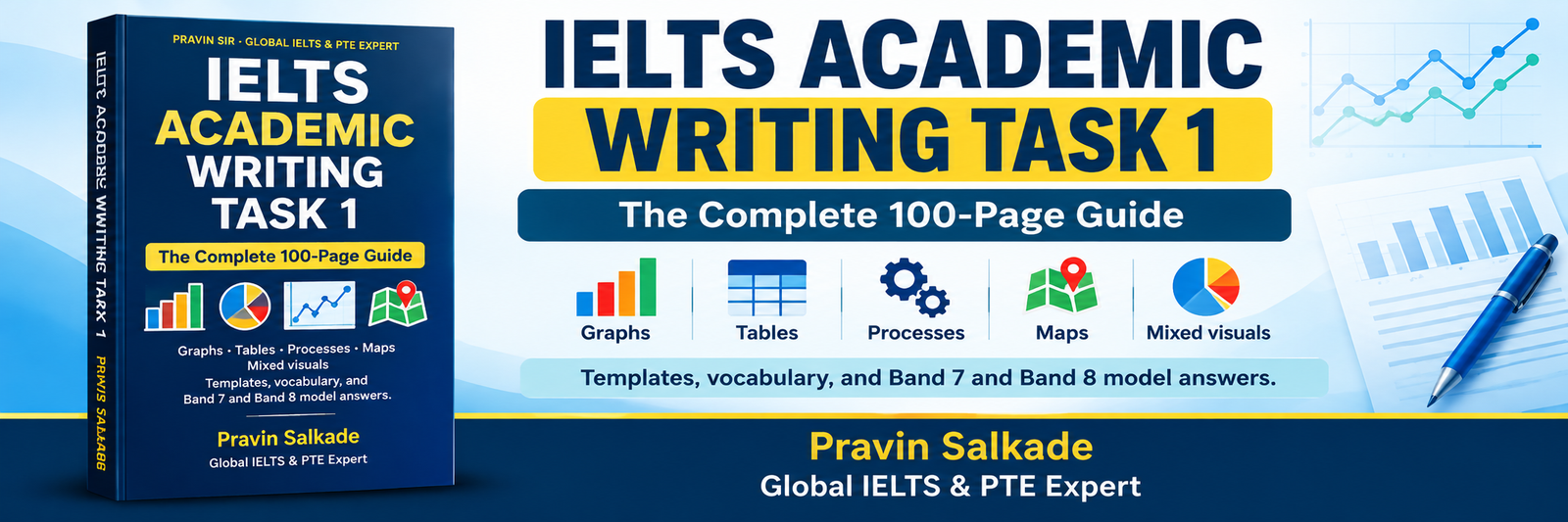
IELTS Academic Writing Task 1 Band 7 Guide | Graphs, Tables & Maps| Pravin Salkade
IELTS Academic Writing Task 1 is a 100-page practical guide covering graphs, tables, processes, maps and mixed visuals, with templates, vocabulary and Band 7/8 models. IELTS_Academic_Writing_Task_1_K
Read the article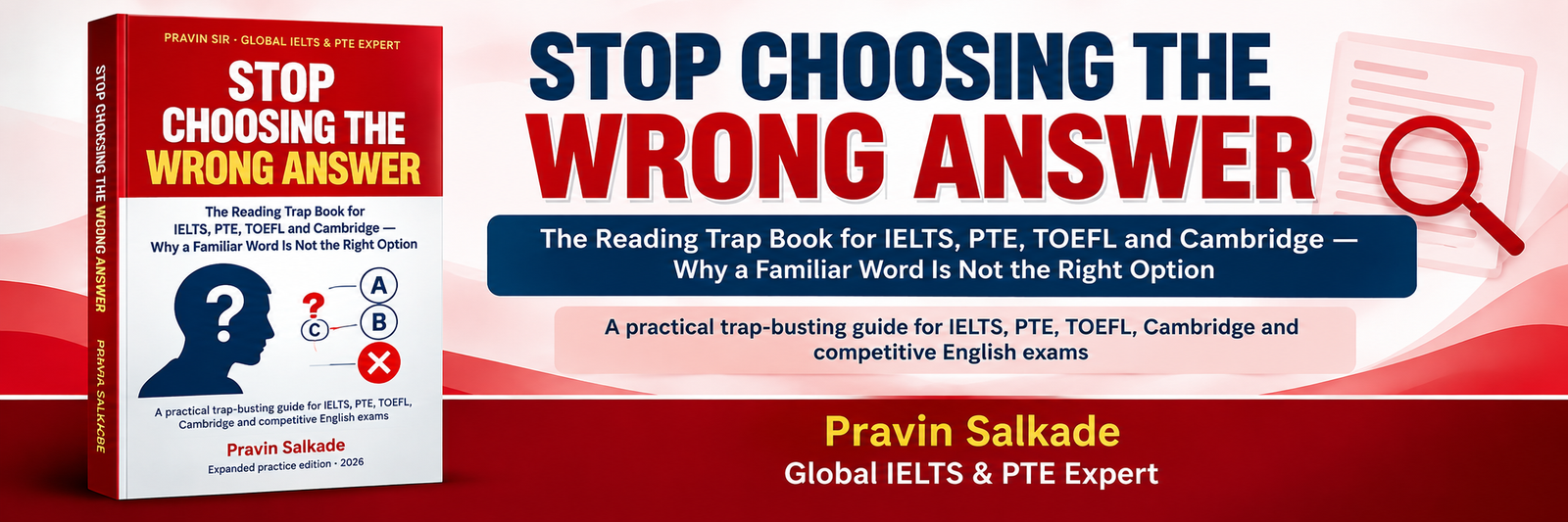
Why You Choose the Wrong IELTS Reading Answer | Reading Traps
Stop Choosing the Wrong Answer is particularly useful for students who repeatedly say, “I understood the passage, but I still selected the wrong option.”
Read the article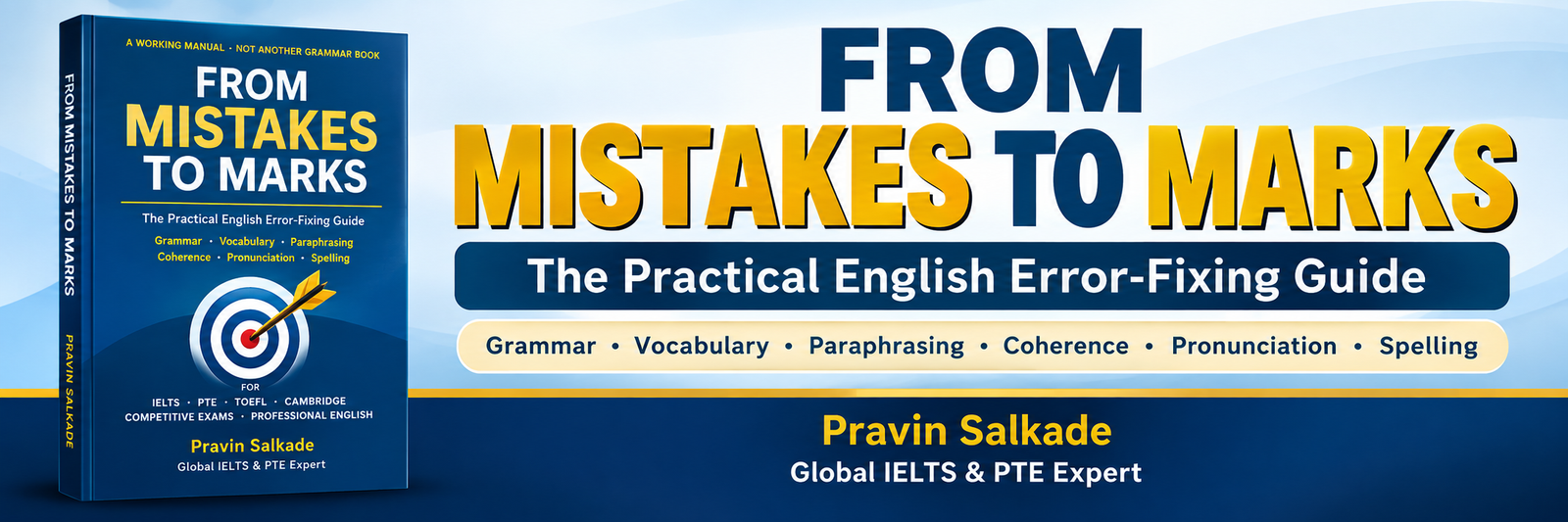
How to Stop Repeating English Mistakes | From Mistakes to Marks
From Mistakes to Marks is designed as a practical error-fixing manual rather than another conventional grammar book. It is especially useful for learners who already know considerable English but still lose marks through recurring mistakes.
Read the article