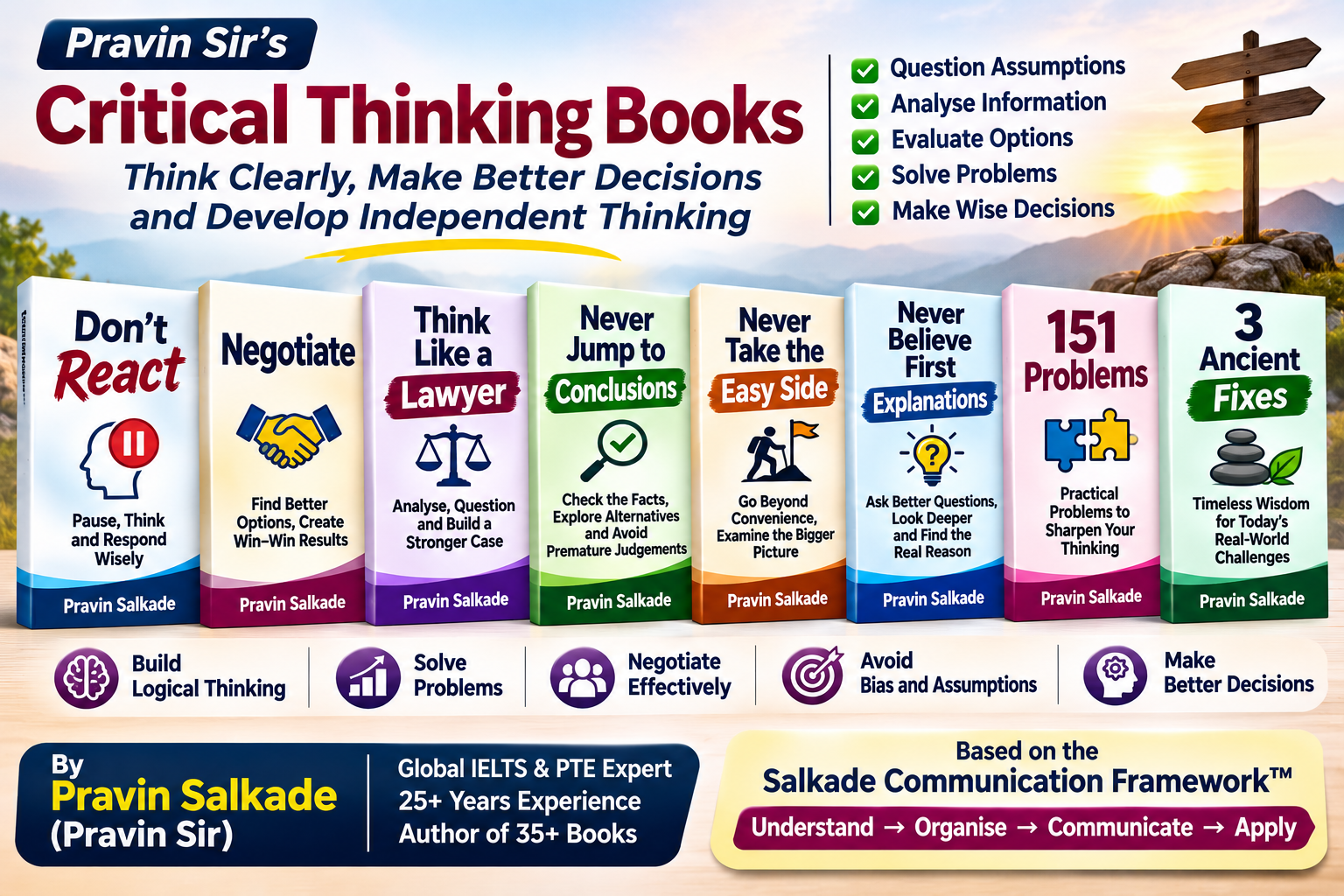
Q1. Why shouldn't we automatically believe the first explanation?
The first explanation is often based on limited information.
It may be correct, but accepting it immediately prevents us from considering alternatives.
Q2. Is questioning everything the same as being negative?
No.
Healthy scepticism means asking whether the evidence supports a conclusion. It does not mean rejecting every claim.
Q3. How can we test an explanation?
Ask:
What evidence supports it?
What evidence contradicts it?
What alternative explanations exist?
What information is missing?
What would change my mind?
Q4. Why are simple explanations so attractive?
They reduce uncertainty.
When something confusing happens, the mind prefers a coherent story—even when the available evidence is incomplete.
Q5. How does this principle apply to education?
A student may believe, “I am bad at English.”
But that explanation may be too broad.
The actual problem could be vocabulary, grammar, pronunciation, confidence, comprehension or lack of practice.
Q6. How does it apply to business?
A business may experience falling sales and immediately blame price.
But other explanations could include changing customer behaviour, competition, positioning, communication or distribution.
Q7. How does it apply to investing?
An investor may see a falling price and immediately conclude that the investment is failing.
Price movement is evidence, but it is not always a complete explanation.
Q8. What is the central lesson?
A convincing explanation is not necessarily a correct explanation.
Before accepting the first story, look for the evidence—and consider what else might explain the same facts.