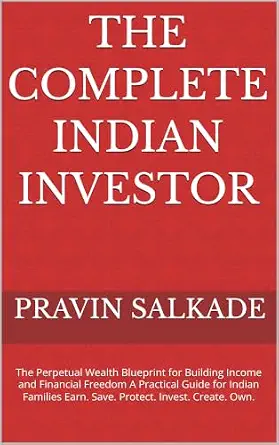
Building wealth is not simply about finding the next multibagger.
A successful investor needs a system for saving, investing, managing risk, controlling emotions and protecting accumulated wealth.
Q1. What does it mean to be a complete investor?
A complete investor understands more than stock selection.
The investor thinks about:
income → savings → asset allocation → investing → risk → taxation → diversification → compounding → wealth protection.
The objective is to create a repeatable wealth-building system.
Q2. Is investing every month through SIPs enough?
An SIP creates investing discipline, but the investment itself still matters.
Investors should understand what they own, why they own it, the level of risk involved and whether the allocation remains appropriate over time.
A SIP is a method—not a guarantee of success.
Q3. Why is diversification important?
Diversification reduces dependence on a single investment or asset class.
If one investment performs poorly, other parts of the portfolio may help reduce the overall impact.
But diversification should not become the random accumulation of dozens of investments that the investor does not understand.
Q4. Should Indian investors invest only in India?
Not necessarily.
An investor's asset allocation can include different asset classes and, depending on circumstances and applicable rules, geographical exposure.
The important question is not India or abroad?
It is:
Does this allocation fit my goals, time horizon and risk tolerance?
Q5. What is more important: returns or risk management?
Both matter, but surviving large losses is particularly important.
A portfolio that loses 50% requires a 100% gain merely to return to its starting point.
This is why protecting capital and controlling unnecessary risk are central parts of long-term investing.
Q6. How does compounding create wealth?
Compounding allows returns to generate additional returns over time.
The longer the investment remains productive, the more powerful the effect can become.
This is why starting early, investing consistently and avoiding unnecessary interruptions can matter enormously.
Q7. Should investors try to predict every market correction?
No.
Markets are influenced by economic conditions, interest rates, earnings, liquidity, sentiment and countless other factors.
Instead of trying to predict every short-term movement, investors can build a system that prepares them for different market environments.
Q8. What is the biggest enemy of an investor?
Often, it is the investor's own behaviour.
Fear can cause selling during panic. Greed can encourage buying after dramatic rises. Overconfidence can produce excessive risk.
A written investment framework can reduce emotional decision-making.
Q9. When should an investor review a portfolio?
A portfolio should be reviewed periodically—not obsessively.
The purpose of a review is to ask:
Has my financial situation changed?
Have my goals changed?
Has my asset allocation drifted?
Has the original investment thesis changed?
Q10. What is the ultimate objective of investing?
The objective is not simply to beat the market every year.
It is to build sufficient wealth to support your financial goals while taking an appropriate level of risk.
Investing is a marathon of decisions, not a race to find the perfect investment.